before day 1
Exploring the Edge
You name the one area of your life where you wish you were showing up differently. Then you find the version of it you haven't said out loud to anyone.

The Shift List · the new book by Brent Perkins
Take it as a compliment.
It means they see you at the edge of something bigger in your life, and they don't want to watch you burn out or walk away from it. They couldn't say all that out loud, so they gave you this instead.

The Shift List is the book. The 40 is how you go live it.
Read by the author.
What's inside
To explore the piece of your life you've been leaving on the table. It might be hiding in your business, with your family, or in you. Pick one. It doesn't matter where you practice.
before day 1
You name the one area of your life where you wish you were showing up differently. Then you find the version of it you haven't said out loud to anyone.
forty days
One page a day, two minutes at a time. Don't binge it. Three field notes along the way hand you the most powerful tools I know: Kind vs. Nice; Call a “T”; and Expectations < Agreements.
after day 40
What you do with it. How you lead, love, and live in integrity, the same way at work, at home, and with yourself.
From the book
in my voice.
Listen · Kind vs. Nice
“This cat can see what you cannot see. He will accelerate your journey. He'll deepen it. He'll find words to say things better than you can.”
“You'd be foolish not to have someone like that on the team who understands a P&L and just about everything else too.”
one for you. one for whoever you just thought of.
Each of you picks your own edge. Send each other the voice notes. No coaching. Just stay in it together.
Want me in it with you? The first ninety days of working with me run on this book. Here's how that works.
The first book
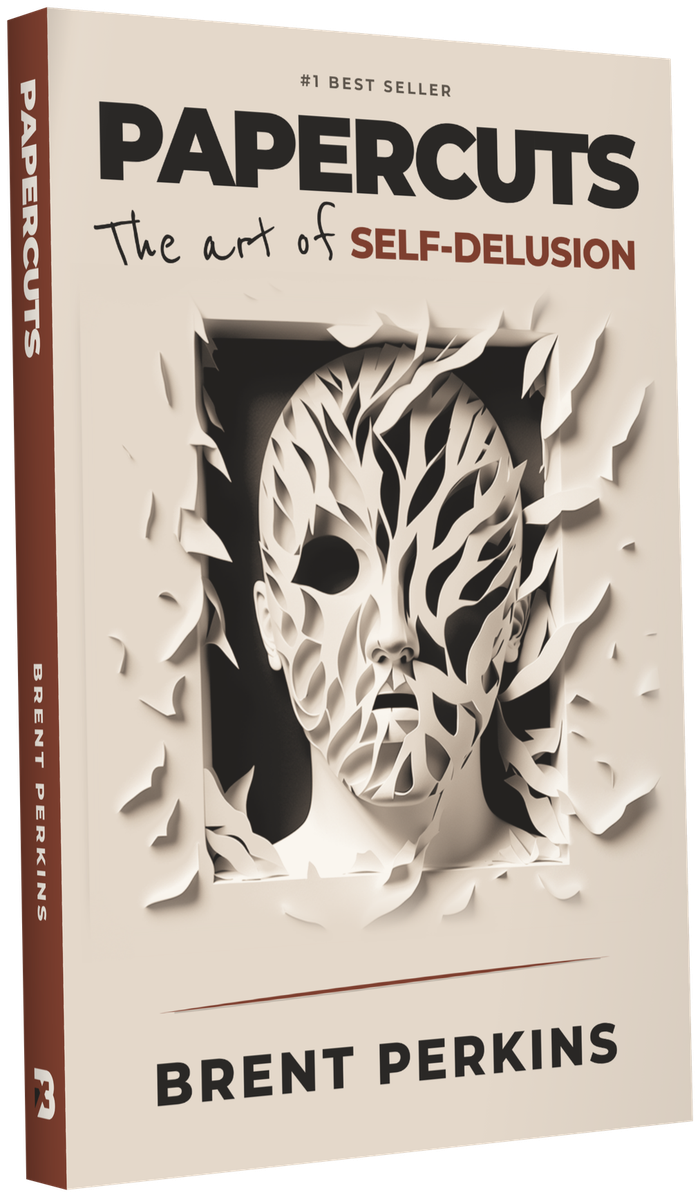
The Art of Self-Delusion
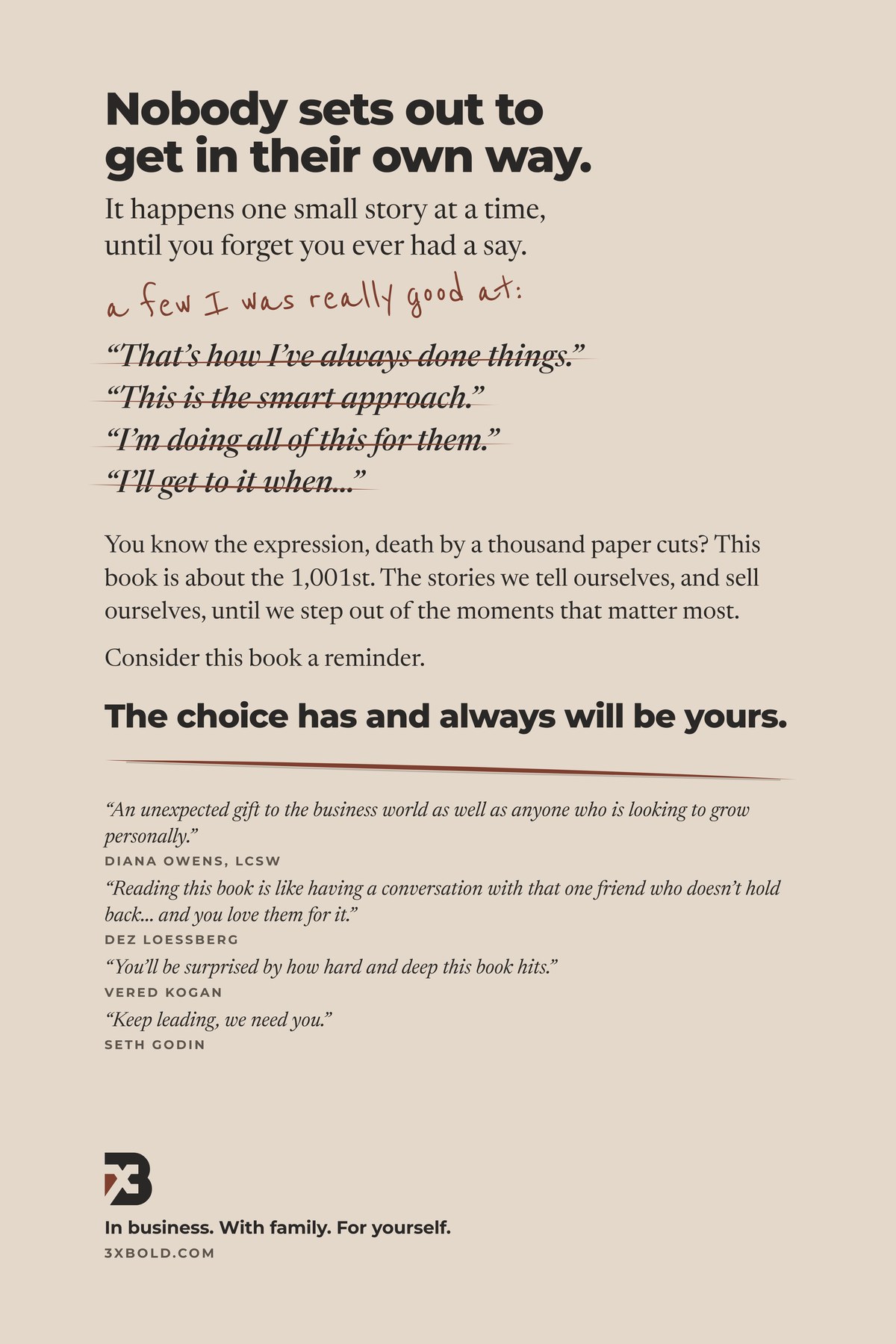
“Reading this book is like having a conversation with that one friend who doesn't hold back... and you love them for it.”
You know the expression, death by a thousand paper cuts? This book is about the 1,001st. The stories we tell ourselves, and sell ourselves, until we step out of the moments that matter most.
I wrote it because I had to interrupt my own patterns before I could see anyone else's. It's also a reminder to keep choosing myself, especially when it's inconvenient.
Papercuts is where you get your choice back. The Shift List is where you use it.
Read by the author.

Field Note #1
I spent most of my life being nice. And I was good at it. Still am.
Underneath the polished and pretty surface, nice is a cold and cruel transaction. We do it so people think well of us. We manage how they feel about us, we keep the room comfortable, we don't ruffle feathers, and we call it ‘being a good person.’
It's not. Nice is for us, dressed up as being for them.
Kind can be scary because it actually costs us something. Kind is saying the true thing because we see the person clearly enough to risk their disappointment. Nice keeps the peace while building resentment along the way. Kind breaks the peace in the effort to build a deeper level of trust.
You already know the easy version of this. Your friend's shirt doesn't match, or they've got toothpaste at the corner of their mouth, and you say nothing. You smile. You're nice about it. And you already know that wasn't kind.
Everybody knows that one. It costs you two seconds of discomfort and you skip it. Fine. That's the shallow end.
I was married for eighteen years. My ex-wife was an extraordinary salesperson stuck in jobs that paid her a fraction of what she was worth, and we both knew it. Yet, I could never say it out loud. I was supportive. I was flexible. I was nice. "Great job, honey." I told myself I was loving her. What I was really doing was protecting myself from what she might do with the truth. Today she makes five times what she made back then, and she'll tell you I held her back. My version took me longer to admit. I was so busy managing her experience of me that I never once told her the real thing, which was that she was playing small and I was helping her do it.
That's not toothpaste on a face. That's years of someone's life. That's what nice actually costs when the stakes are real, and it almost never looks like cruelty. It looks like support. It looks like love, which is why it's so hard to catch.
If toothpaste is the tip of the iceberg, then what you hold back from your loved ones lies just under the surface. So, what’s at the bottom of this behemoth?
Investing in yourself feels uncomfortable because you've spent your whole life investing in everyone else and calling it purpose.
You've been kind to the entire world and nice to yourself. You tell other people the gentle lie to keep them comfortable, but the cruelest performance of niceness you run is the one aimed inward. The "I'm fine," the "I'll get to it," the "I don't need that much," the standards you'd never hold a person you love to.
You've been managing your own experience of you. Performing for the one person who has to live inside your skin.
The forty-day journey you are about to embark on is, right here, right now, calling you into what might be the first real act of kindness toward yourself you've committed to in a long time.
You can feel the difference in your body if you pay attention. When you're being nice, there's a tightness in the back of your throat, something held back in your expression of it, the voice that cracks or goes quiet. When you're being kind, even when the words get stuck and feel impossible to spit out, there's space around them. Nothing hidden. No story to keep straight. It just is.
The kindest people I know are far from nice. Yet none of them started out that way. It takes a lot of practice that starts with an awareness of what your default way of showing up to life has been.